

Fake Compostable Products: The Biggest Threat to the Genuine Industry

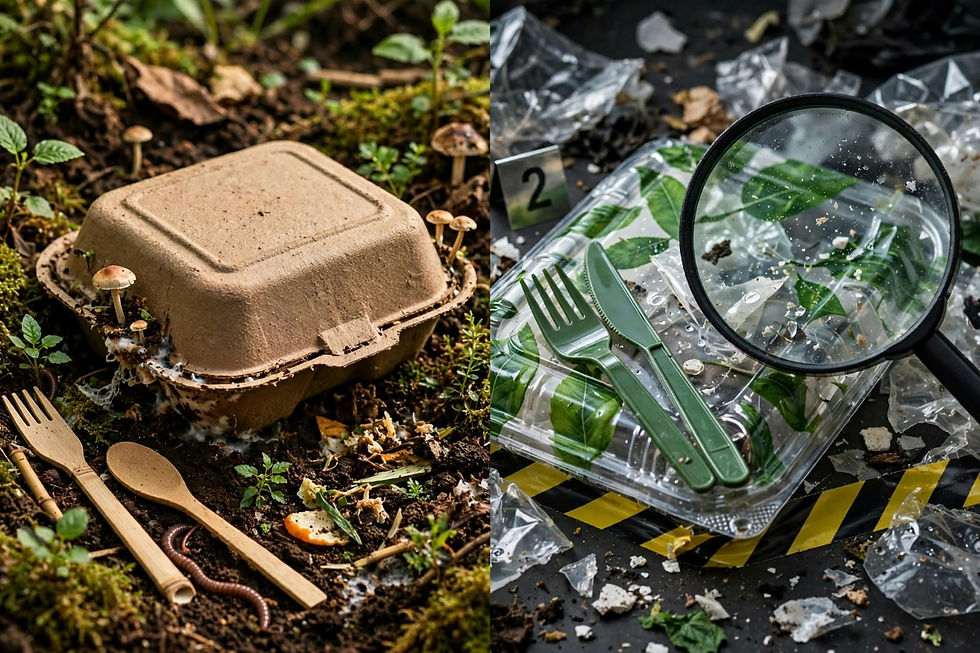
One of the most serious risks facing the compostable industry is not competition from conventional plastic. It is the presence of products making environmental claims that customers cannot easily verify.
A buyer may purchase a bag labelled "compostable" and assume that it will break down in any environment. That assumption may be incorrect.
Compostability is not simply a visual property. It depends on material composition, applicable standards, certification and the conditions under which the product is expected to break down.
Why misleading products cause damage
Suppose a consumer uses a questionable product and it does not behave as expected.
The consumer may not blame the individual manufacturer. They may blame the entire concept of compostable packaging.
This creates a reputation problem for genuine companies.
That is why the industry needs stronger verification.
Certification matters
A credible certification process helps establish whether a product meets the requirements of a relevant standard.
Buyers should not rely only on a supplier's marketing brochure.
They should ask for technical specifications, test reports, certification information and application guidance.
Businesses should also understand the difference between bio-based, biodegradable and compostable claims.
A material can be bio-based without being compostable. A biodegradable claim can depend on environmental conditions. Compostable products may require specific industrial or controlled composting conditions.
The communication must therefore be precise.
The role of regulators
Regulators can support the market by enforcing applicable standards and taking action against misleading environmental claims.
Clear rules are particularly important for products sold at scale through e-commerce and retail channels.
Testing laboratories and certification bodies also have an important role.
Industry responsibility
Manufacturers should not make claims simply because a competitor is making them. Converters and distributors should verify documentation before selling products. Brands should understand the end-of-life pathway of the products they purchase.
Industry associations can publish buyer guidance and help businesses understand common standards. Companies such as Deltora Biopolymers can contribute to a more credible market by focusing on material quality, technical performance and responsible sustainability communication.
The solution is not to make compostable products more complicated for customers.
It is to make verification easier. A healthy market should allow a buyer to answer three questions quickly:
What is this product made from?
What standard or certification supports the claim?
What should happen to the product after use?
When those questions have clear answers, legitimate businesses gain an advantage.
The compostable industry needs growth, but it needs trustworthy growth.
For more information visit us at https://www.thebiopolymers.com/


Comments